Pommel Horse Element Classification
An introduction to circles, scissors, travel, spindle and dismount families on pommel horse.
Prepared by Saleh Noor
Pommel horse movements can be understood more easily when they are classified according to their fundamental movement patterns. With the exception of scissors and a small number of special elements, most pommel horse skills develop from continuous circular work using circles or flairs.
This classification presents five principal movement families. Many advanced elements combine, extend, reverse, or travel through one or more of these families.
Important Coaching Considerations
When teaching pommel horse skills to young gymnasts, coaches should consider the following principles:
- Respect individual differences, age groups, physical maturity, and training experience.
- Teach a consistent turning direction across related skills whenever technically appropriate.
- Develop balance, coordination, spatial awareness, rhythm, and control of physical effort.
- Teach every movement correctly from its entry through its completion.
- Build strong gymnastics foundations before introducing advanced elements.
- Develop handstand technique as an essential part of early gymnastics preparation.
- Teach safe landing and falling techniques to reduce the risk of injury.
- Encourage discipline and concentration within a safe and motivating environment.
- Use gradual skill progressions to build confidence and reduce unnecessary risk.
- Prioritize movement quality and technical control over the number of repetitions.
Foundation: Circles and Flairs
Circular work is the technical foundation of most pommel horse elements. During a circle, the gymnast keeps the legs together while rotating around the horse through alternating hand support. A flair uses a similar circular action but with the legs separated in a wide straddle.
Good circular work requires open shoulders, extended hips and knees, pointed toes, continuous weight transfer, and a consistent rhythm. The body should move around the support rather than remaining fixed between the arms.
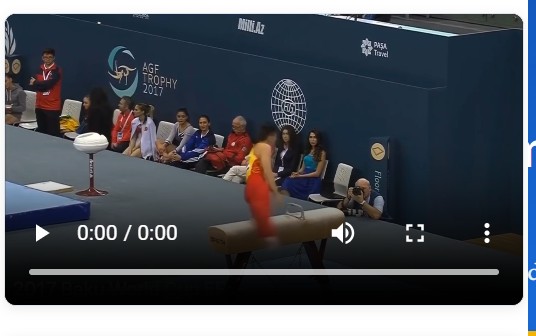
Circle and flair demonstration 1
Circle and flair demonstration 2
Circle and flair demonstration 3
1. Stockli
A Stockli is based on rotation around the supporting hand or hand-support axis. In its basic form, the gymnast turns approximately 180 degrees, beginning from rear support with both hands positioned over one pommel and finishing in front support.
Correct execution depends on precise hand placement, early weight transfer, continuous hip movement, and maintenance of the circular rhythm. The turn should be integrated into the circle rather than performed as a separate movement.
Technical Points
- Begin the turn from a stable and extended circle.
- Transfer the body weight completely onto the supporting arm.
- Keep the hips moving around the horse without stopping.
- Replace the free hand accurately to complete the directional change.
- Maintain straight knees, pointed toes, and an extended body position.
Stockli demonstration 1
Stockli demonstration 2
2. Spindle
A spindle is a turn around the gymnast’s longitudinal body axis while continuing circular work. Depending on the element, the body may turn through 90, 180, or 360 degrees.
The turning action may begin during the entry into the circle or during its exit. The shoulders, hips, and legs must remain coordinated so that the gymnast completes the turn without interrupting the rhythm.
Technical Points
- Establish a consistent circle before beginning the turn.
- Coordinate the shoulders and hips throughout the rotation.
- Keep the body extended and avoid bending at the hips.
- Place each hand in the correct position and at the correct time.
- Complete the turn without reducing the height or speed of the circle.
Spindle demonstration 1
Spindle demonstration 2
Spindle demonstration 3
3. Kehre
A Kehre is a turning movement performed around the hand-support axis. It changes the gymnast’s direction while maintaining support and continuity on the apparatus.
Depending on the element and its technical definition, the directional change may involve approximately 180 or 360 degrees of rotation. Effective shoulder movement and accurate hand replacement are essential for maintaining balance and speed.
Technical Points
- Approach the turn with sufficient circular speed and amplitude.
- Move the shoulders actively over the supporting hand.
- Keep the hips extended during the directional change.
- Avoid pausing between the release and replacement of the hand.
- Finish in a stable support position that allows the routine to continue.
Kehre demonstration
Reverse Kehre demonstration
4. Reverse Stockli
A reverse Stockli uses a turning action opposite to the direction associated with a standard Stockli. The movement generally begins during the exit phase of a circle and rotates around a single supporting arm or hand-support point.
The gymnast must keep the hips moving continuously while the supporting arm controls the change of direction. Late hand placement or insufficient weight transfer can interrupt the circle and reduce technical quality.
Technical Points
- Begin from technically stable circular work.
- Transfer the body weight firmly onto the supporting arm.
- Keep the hips moving around the horse during the reverse turn.
- Avoid pulling the legs inward or bending at the hips.
- Complete the hand replacement early enough to continue the circle.
Reverse Stockli demonstration 1
Reverse Stockli demonstration 2
Reverse Stockli demonstration 3
5. Russian Swing
A Russian swing is performed through continuous front-support turning. The body follows the movement of the hands as the gymnast rotates around the apparatus.
Unlike a flair, the legs normally remain together during Russian work. The movement requires strong shoulder support, rapid but controlled hand placement, extended body lines, and uninterrupted rotation.
Technical Points
- Maintain continuous front support throughout the turning action.
- Keep the legs together, knees straight, and toes pointed.
- Move the hands quickly while maintaining control.
- Keep the shoulders active and positioned over the supporting hand.
- Avoid pauses or loss of rhythm during the rotation.
Russian swing demonstration 1
Russian swing demonstration 2
Russian swing demonstration 3
Russian swing demonstration 4
Other Movement Families
Some pommel horse elements do not fit completely within the five classifications above. Other elements combine circular work with scissors, travel, hopping, or partial turning actions.
- Tramlot: includes a movement pattern related in part to a half Stockli.
- Double Suisse: uses a distinctive combination of support and turning actions.
- Stützkehr: includes an action related in part to a reverse half Stockli.
- Travel elements: circles or flairs performed while moving along or across the horse.
- Hop elements: circular movements combined with a hop or simultaneous release and replacement of the hands.
- Scissor elements: pendulum-based movements performed with alternating leg actions rather than continuous circles.
- Handstand elements: skills that rise from circular or scissor work into a handstand, including some dismount families.
Combining Movement Families
Advanced pommel horse skills frequently combine more than one movement family. For example, a gymnast may perform circular work with travel, add a spindle, reverse the turning direction, or finish through a handstand.
Understanding these foundations helps gymnasts and coaches analyze complex elements as combinations of familiar technical actions instead of treating every skill as an entirely separate movement.
General Technical Priorities
- Maintain continuous rhythm without pauses between hand supports.
- Transfer body weight clearly from one arm to the other.
- Keep the shoulders open and active throughout the movement.
- Extend the hips, knees, ankles, and toes whenever the skill requires a straight-body position.
- Use accurate hand placement to control direction and travel.
- Preserve body height and amplitude throughout circles and flairs.
- Introduce turns only after the gymnast has developed stable circular work.
- Use appropriate progressions and suitable training equipment.
- Stop training if the gymnast experiences pain or loses safe technical control.
Common Technical Errors
- Bending the hips during the rear or side phase of the circle.
- Allowing the shoulders to close or remain behind the hands.
- Placing the hands too late during turning elements.
- Losing leg extension or separating the legs during circle work.
- Reducing speed before beginning a Stockli, spindle, or Kehre.
- Performing the turn as a separate action instead of integrating it into the circle.
- Training advanced combinations before establishing stable fundamental circles.
Suggested Learning Progression
- Develop correct front, side, and rear support positions.
- Learn weight transfer and shoulder movement on floor equipment or a mushroom.
- Develop consistent circles with correct body extension.
- Introduce flairs after the gymnast understands circular rhythm and support.
- Practice simple hand placements and partial turns.
- Introduce Stockli and reverse Stockli actions through suitable progressions.
- Add spindle and Kehre movements after stable circular work is established.
- Develop Russian swings independently before connecting them to other elements.
- Introduce travel, hopping, handstand, and combined elements gradually.
Important Rule Note
This classification is intended as an educational and coaching framework. Official element names, values, recognition requirements, and element-group classifications can change between editions of the FIG Code of Points.
For competition decisions, coaches and judges must consult the current official Men’s Artistic Gymnastics Code of Points and the latest FIG help desk documents and newsletters.
Conclusion
Pommel horse performance is built on rhythm, support, body extension, weight transfer, and efficient circular movement. Classifying skills into Stockli, spindle, Kehre, reverse Stockli, Russian swing, and additional special families gives coaches and gymnasts a practical way to understand how complex elements are constructed.
The most effective learning process begins with technically correct circles and flairs, followed by the gradual introduction of turns, travel, combined elements, and handstand work under qualified coaching supervision.