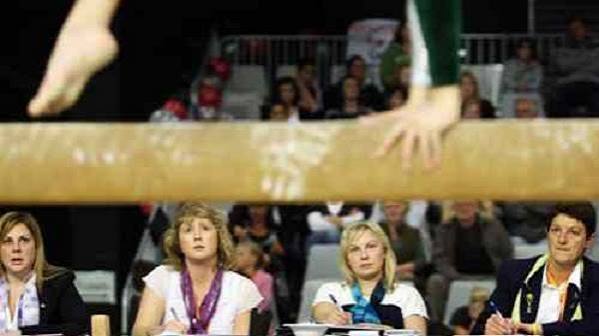
1. What is Gymnastics Judging?
Gymnastics judging is the process of scoring a gymnast’s performance based on how well they execute their skills.
Judges look at technique, difficulty, and presentation to give fair scores.
2. Why Do We Need Judging?
- Ensures competitions are fair and consistent.
- Rewards skill, precision, and creativity.
- Helps gymnasts improve by knowing what’s evaluated.
3. How Are Performances Scored?
Scores in gymnastics usually have two main parts:
- Difficulty Score (D-score): Measures how hard the routine is. The more challenging the skills, the higher the score.
- Execution Score (E-score): Measures how well the gymnast performs the skills. Judges look for:
- Good form and posture
- Proper technique
- Smoothness and control
- Landings without mistakes
Example: A gymnast might do a high-difficulty flip, but if they wobble on landing, their execution score goes down.
4. Penalties and Deductions
- Small mistakes like steps on landing or bent knees lead to minor deductions.
- Major mistakes like falls or missing an element lead to bigger deductions.
5. The Final Score
Final Score = Difficulty + Execution - Deductions
Judges aim to give a score that reflects both the challenge and the quality of performance.
6. Key Tips for Understanding Judging
- Watch routines carefully and notice form, balance, and precision.
- Don’t worry about memorizing every rule — look at the overall skill and presentation.
- Every skill matters: even small elements affect the final score.
✅ Tip for teaching this:
You can use simple images or videos showing “perfect vs. flawed†executions to make it even clearer for beginners.