-
ðŸ‹ï¸ Rope Climbing in Gymnastics for Kids: Anatomy, Benefits, and Techniques
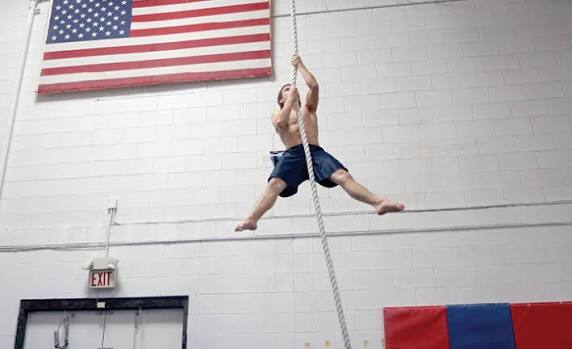
- Rope climbing holds great importance in gymnastics training as it strengthens the upper body and develops endurance and coordination. It’s not just about reaching the top — it’s about discipline, focus, and perseverance.
- Upper Body: The arms and shoulders work together to pull the body upward. The biceps, triceps, and forearms maintain a strong grip, while the shoulder muscles stabilize the movement.
- Back Muscles: The latissimus dorsi and spinal muscles generate power for each upward motion, providing strength and stability.
- Core Muscles: The abs, obliques, and lower back engage to maintain balance and control, preventing unnecessary swinging.
- Legs: The legs assist by pushing the body upward. Calves, quadriceps, and hamstrings contribute to efficiency and reduce arm fatigue.
- Grip: A firm but relaxed grip ensures safety and effectiveness. Strong hands and fingers improve performance in many other gymnastics movements.
- Develops Strength: Engages multiple muscle groups, building full-body strength essential for gymnastics and other sports.
- Improves Coordination & Balance: Kids learn to synchronize body movements, improving stability and overall coordination.
- Boosts Confidence: Reaching the top gives a strong sense of achievement, enhancing self-esteem and motivation.
- Increases Flexibility: Stretching and climbing improve flexibility in the arms, shoulders, and legs.
- Builds Mental Toughness: Requires patience, focus, and determination, teaching kids to push through discomfort.
- Encourages Teamwork: When practiced in groups, it promotes cooperation, support, and communication among children.
- Inspires Love for Gymnastics: Fun and challenging, rope climbing fosters long-term interest in the sport.
- Starting Position: Stand near the rope with feet shoulder-width apart. Grip the rope with both hands fully extended above the head.
- Use the Legs: Push with the legs while pulling with the arms to reduce strain and increase climbing efficiency.
- Pull and Push Rhythm: Alternate between pulling with arms and pushing with legs to climb smoothly and steadily.
- Foot Lock: Cross one leg over the other to lock the rope, allowing short rests without arm strain.
- Climb in Sections: Move step by step, pausing briefly to maintain control and balance.
- Controlled Descent: Lower yourself slowly while engaging core muscles to ensure a safe landing.
- Warm-Up: Perform light stretches and warm-up exercises before climbing.
- Supervision: Always have a coach or instructor present to guide and ensure safety.
- Proper Equipment: Use strong ropes and cushioned mats beneath the climbing area.
- Start Low: Begin with short climbs and gradually increase height as skill and confidence improve.
and its a good sign to tell us that the kid can do giants.
Anatomy During Rope Climbing
Benefits of Rope Climbing for Kids
Rope Climbing Techniques
Safety Tips